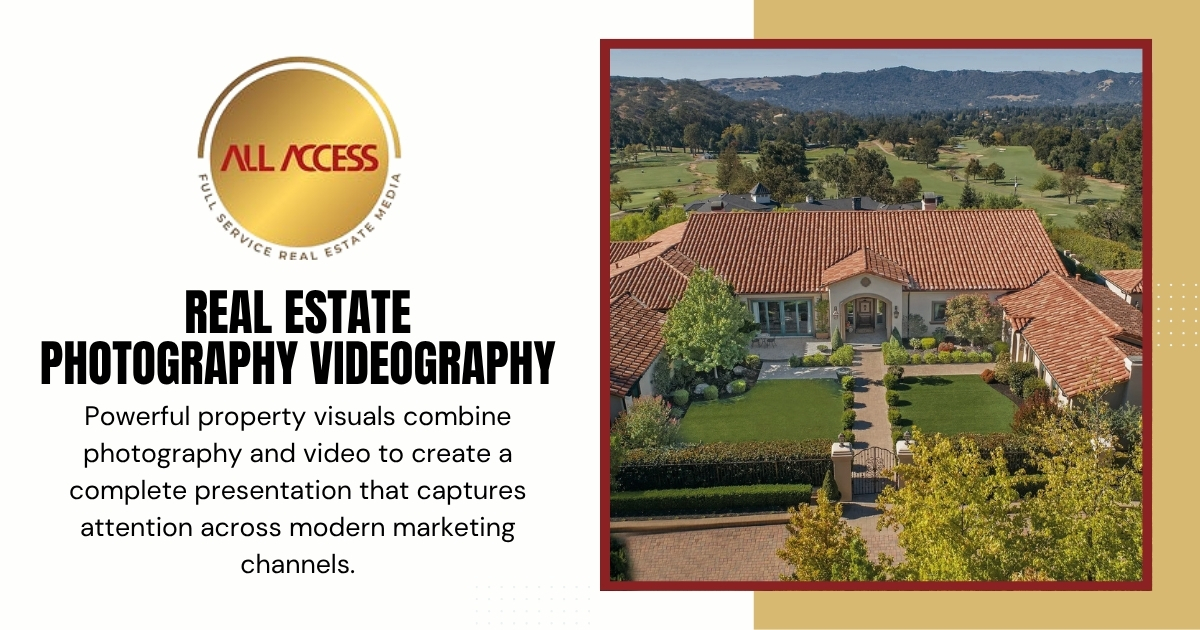

Most buyers meet your listing as a thumbnail on a phone. If that first image is dark, crooked, or cluttered, many of them keep scrolling and never read the description. In NAR’s buyer surveys, the highest share of buyers has ranked photos as “very useful” every year since the survey began in 2013. Photos aren’t a nice extra. They’re the first showing.
This guide is for real estate photography services in Pleasant Hill and the East Bay. It covers how to prep a home, how light and composition work, what staging and editing are allowed (California changed the rules in 2026), what a shoot typically costs, and how to choose a photographer.
Quick Takeaways
- Prep is the cheapest upgrade. Decluttering and cleaning help more than any editing.
- Light and timing matter more than gear. Ask when the photographer plans to shoot each side of the house.
- Since January 1, 2026, California requires licensees to disclose digitally altered listing images and make the originals available.
- A good photo set has a strong lead image, a logical sequence, and enough shots to show flow, not a pile of near-duplicates.
- Compare quotes by what you receive (photo count, turnaround, rights, extras), not just the base price.
Why Listing Photos Matter for Pleasant Hill Sellers
Buyers in the East Bay compare listings side by side, often within the same afternoon. Your photos do the first round of screening. In NAR’s 2024 report, photos were the website feature buyers most wanted, with more than half rating them “very useful”.
I’d be careful with any claim that professional photos “sell homes X% faster” or “for X% more.” I couldn’t find rigorous local data tying photography to sale price in Pleasant Hill, and those numbers often get repeated without sources. What you can say safely is simpler: good photos get more of the right people to read the listing and book a showing. They can’t fix an overpriced home or a weak location.
What Professional Real Estate Photography Includes
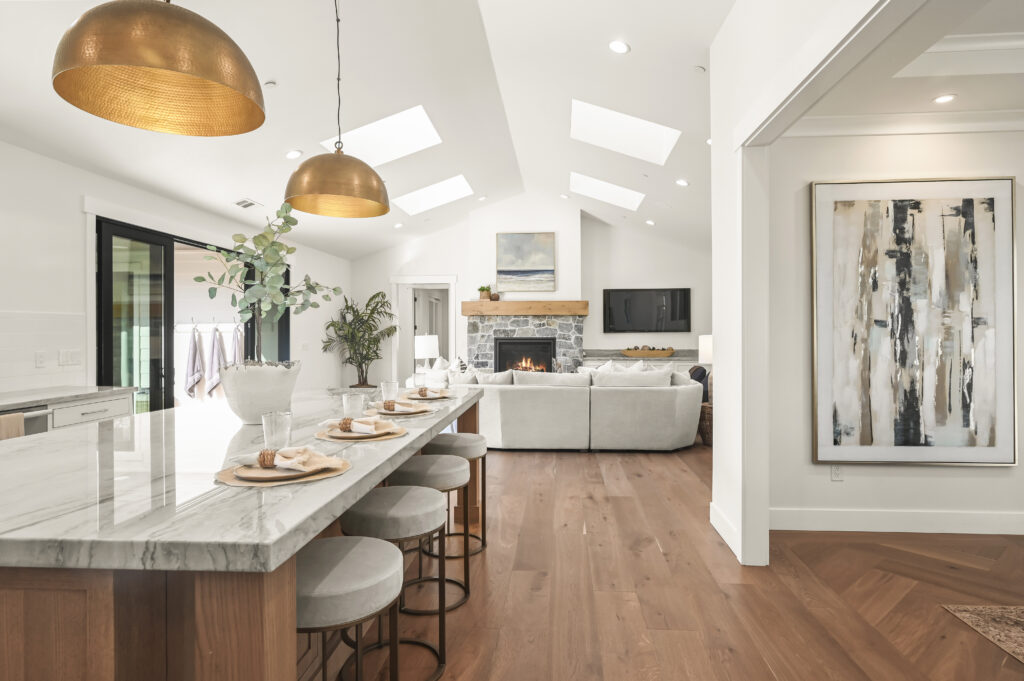
A professional shoot is more than a camera and a wide lens. A typical process looks like this:
- Walk-through. The photographer reviews the home, plans the shot list, and notes light direction and problem areas.
- Shooting. Cameras sit on tripods at a controlled height, usually with wide-angle lenses. Many photographers blend multiple exposures or use flash so windows and interiors both look natural.
- Editing. Color correction, exposure balancing, and straightening are standard.
- Delivery. You receive web-ready images sized for the MLS and other platforms.
All Access Photo says it shoots to MLS specifications first, then pulls the same images for other formats such as video, flyers, and social posts, so nothing gets recomposed later.
How to Prepare Your Home: A Room-by-Room Checklist
Prep decides most of what the camera can show. Start a week or two ahead for repairs, and do the final reset the morning of the shoot.
| Area | What to Do |
| Kitchen | Clear counters except one or two items; hide dish soap, sponges, and magnets; wipe appliances and the sink |
| Living and dining | Remove extra furniture and small items; fluff cushions; clear the dining table or set it simply |
| Bedrooms | Make beds with clean, simple linens; clear nightstands and floors |
| Bathrooms | Close toilet lids; remove toiletries, mats, and trash cans; wipe mirrors and fixtures |
| Entry and hallways | Clear shoes, coats, and cords; open doors that normally stay closed |
| Exterior | Mow and edge, sweep walkways, remove hoses, bins, and toys; move cars off the driveway and street if possible |
Day-of steps:
- Open blinds and curtains fully.
- Turn on all lights unless your photographer says otherwise (bulbs should match in color).
- Remove personal items: family photos, mail, documents, and anything with your name or address.
- Put pets out of the house or in a safe space away from the photographer.
- Ask people to be out of the house if possible, since reflections and movement slow the shoot.
Staging and Virtual Staging for Photos
Photos make empty or cluttered rooms look worse than they do in person. You have three options:
| Option | Best For | Main Benefit | Important Consideration |
| Decluttering only | Furnished homes in good shape | Cheapest, fastest | Won’t fix dated or mismatched furniture |
| Physical staging | Vacant or high-value homes | Buyers experience it in person too | Higher cost and logistics |
| Virtual staging | Vacant homes | Lower cost; flexible styles | Must be disclosed under California law |
All Access Photo lists virtual staging at $39 per image, $99 for three, or $199 for six on its site (confirm current pricing). Virtual staging works best when the furniture scale and style match the home and the likely buyer. Over-the-top or misleading staging backfires when buyers walk in, and the room feels smaller.
California’s disclosure rule
Starting January 1, 2026, AB 723 requires real estate brokers and agents to clearly disclose when marketing images have been digitally altered and to give buyers access to the original, unaltered versions. Virtual staging is a clear example. A further point: the law applies to licensees, not the portals that distribute listings. Photographers and stagers should deliver both altered and unaltered versions, clearly labeled, so agents can comply.
Light, Timing, and Twilight Photography
Light separates decent photos from great ones. A few principles:
- Time the shoot to the house. Rooms with big west windows can look best in the afternoon; east-facing rooms in the morning. Ask your photographer how they plan the day.
- Avoid mixed colors. Warm bulbs, cool LEDs, and daylight clash. Matching bulbs and balancing exposures help.
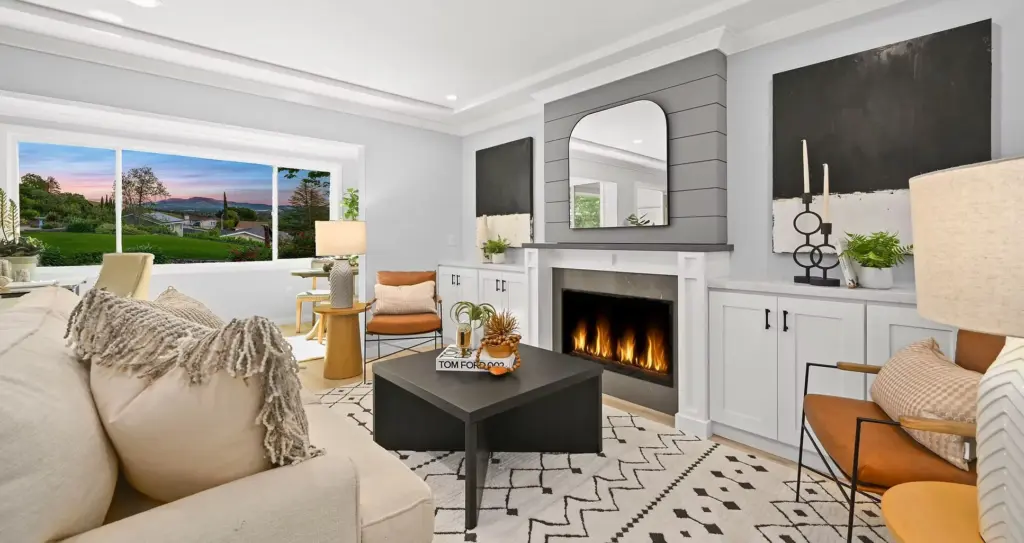
- Overcast isn’t a deal-breaker. Soft light can flatter interiors, though exteriors may look flat. Bright blue skies help curb appeal.
- Plan for the season. Short winter days and rain limit options, and summer midday sun can be harsh. Hazy or smoky days can flatten skies, so be ready to reschedule if the sky matters.
Twilight photography is shot shortly after sunset, when interior lights glow, and the sky shows color. It works well for exteriors, pools, and homes with strong lighting. All Access Photo lists twilight photography at $269 on its site. Since the sky is real in a twilight shot, it’s a clean way to get a dramatic image without sky replacement.
Composition and Wide-Angle Lenses: What Good Interiors Look Like
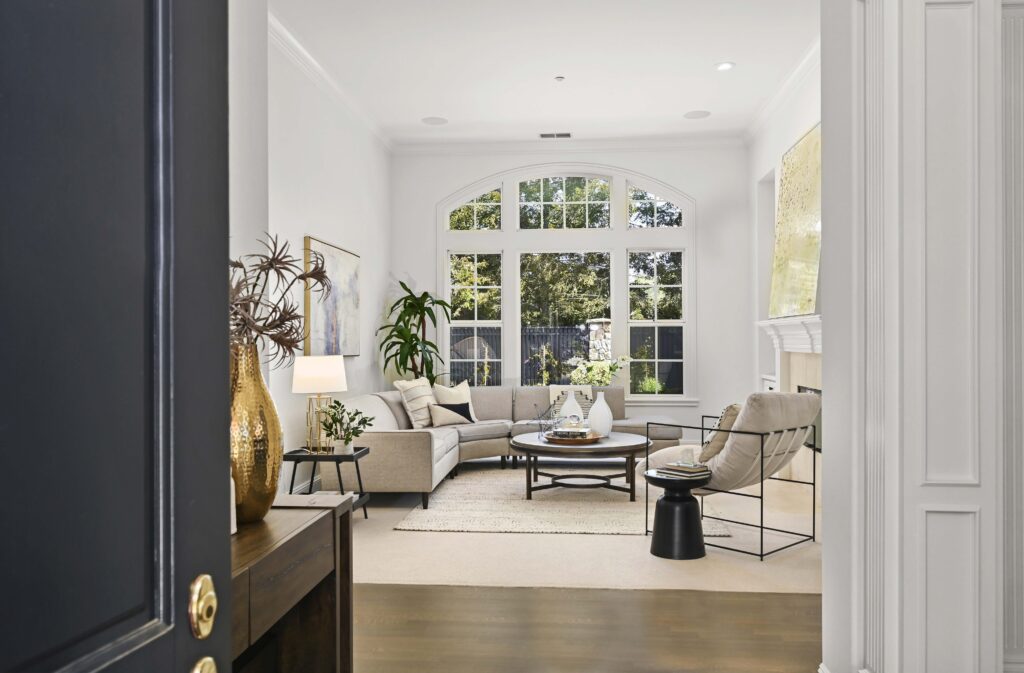
Wide-angle lenses make rooms look open, but too much distortion makes them look unreal, and buyers notice when they walk in. Good interior photos tend to share these traits:
- Straight vertical lines. Walls shouldn’t lean.
- Camera at a natural height, often chest level, so counters and furniture look proportional.
- Corner angles that show how a room connects to the next.
- Room for the eye. Not so tight that a living room looks like a closet, not so wide that the floor looks stretched.
| Common Mistake | Better Approach |
| Ultra-wide lens makes small rooms look huge | Use a moderate wide angle that matches reality |
| Camera too high or too low | Shoot near chest height with straightened verticals |
| Photos from doorways only | Shoot from corners to show flow |
| Too many near-identical shots | Choose the strongest angle per space |
Exterior, Curb Appeal, and Aerial Photos
The front exterior is usually the lead image. Prep matters: mow, edge, sweep, trim bushes, tuck away bins and hoses, and clear the driveway. A freshly watered lawn and open front door help, too.
Aerial photos show lot size, position, and nearby parks or streets, which can be valuable for larger lots or homes near open space. If you hire a drone pilot, commercial real estate work requires an FAA Part 107 certificate, and controlled airspace requires FAA authorization, which the LAANC system can provide quickly for flights at or below 400 feet. Ask your photographer whether they hold the certificate and check airspace. All Access Photo lists FAA-certified drone operators on its team page.
Photo Editing: What’s Acceptable and What’s Misleading
Editing should make photos look like the house on a good day, not like a different house. California’s rules now put that line in writing.
| Edit | Disclosure Needed? |
| White balance, exposure, straightening | Generally treated as standard edits that don’t require disclosure |
| Adding grass, removing wires, virtual staging | Alterations that change the representation of the property and require disclosure |
| Sky replacement | May be covered, because the law reaches elements outside of or visible from the property, including the sky California AB 723 and Digital Alteration Disclosures +2 |
Your MLS may add its own rules. For example, CRMLS doesn’t allow digitally altered images other than virtual staging, and requires the original image to appear immediately before or after the altered one. Check your local MLS before uploading.
Enforcement matters because alteration is common. A first-quarter 2026 analysis by Coraly of nearly 40,000 primary listing images on four major portals found 10.8% showed signs of digital manipulation, and more than 90% of those carried no visible disclosure. When in doubt, disclose, and keep originals. This is a general summary, not legal advice, so check with your broker for specifics.
Beyond Still Photos: Video, 3D Tours, Floor Plans, Flyers, and Social
Photos lead, but other formats help in specific situations:
| Format | Best For | Main Benefit | Consideration |
| Video walk-through | Larger or higher-priced homes | Shows flow and scale | Takes more time to shoot and edit |
| Zillow 3D Showcase | Buyers comparing out-of-area or several listings | Lets buyers tour before visiting | Needs a separate scan |
| Floor plan | Any home with a complex layout | Answers layout questions fast | Pair with photos |
| Printed flyer | Open houses | Something buyers can take with them | Should match the online photos |
| Social media content | Reaching local buyers and agents | Keeps the listing visible | Needs a steady stream of content |
Not every listing needs everything. Match the format to the home and budget. All Access Photo offers video, Zillow 3D, flyers, and social services alongside photography. You’ll find those packages on its site.
How Many Photos and Which Shots Do You Need?
Enough to show the home’s flow and best features, but not so many that weak shots dilute strong ones. A solid shot list usually includes:
- Front exterior (lead image)
- Kitchen (two or three angles)
- Living and dining areas
- Primary bedroom and bath
- Other bedrooms and bathrooms
- Laundry and any special spaces (office, bonus room)
- Backyard, patio, pool, or views
- A few details that carry the home’s character
All Access Photo’s published photo tiers scale by home size: up to 24 photos for homes under 1,500 square feet, up to 30 under 2,500, up to 40 under 4,000, and up to 50 under 5,000. That’s a reasonable benchmark. Lead with your best image, then follow a path a buyer would walk: outside, in, then back out to the yard.
What Real Estate Photography Costs in Pleasant Hill and the East Bay
I couldn’t verify a regional benchmark, so the most useful numbers I can offer come from a local provider’s published pricing. All Access Photo’s site lists these (confirm current rates before relying on them):
| Service | Published Price |
| Photography, up to 24 photos (under 1,500 sq ft) | $199 |
| Photography, up to 30 photos (under 2,500 sq ft) | $239 |
| Photography, up to 40 photos (under 4,000 sq ft) | $279 |
| Photography, up to 50 photos (under 5,000 sq ft) | $329 |
| Twilight photography | $269 |
| Virtual staging | $39 per image; $99 for 3; $199 for 6 |
| Video walk-through packages | $499, $699, and $899 |
| Zillow 3D Showcase package | $399 |
What moves the price: home size, number of photos, twilight or aerial add-ons, staging, video, rush requests, and travel. Packages also differ in what’s bundled. Some include a property website, an e-blast to local agents, or same-day photo turnaround.
When you compare quotes, look at:
- Photo count and size tier
- Turnaround time
- Usage rights, meaning where you can use the images and for how long
- What’s bundled versus billed separately
- Cost per usable image, not just the headline price
How to Choose a Real Estate Photographer
- Look at consistent portfolio work in homes like yours, with straight lines, accurate colors, and bright but natural interiors.
- Ask about delivery. MLS-ready sizes, turnaround, and revision policy.
- Check reliability. Reviews, rescheduling policy, and how quickly they respond.
- Ask about disclosure. A photographer familiar with California’s rules will label altered images and provide originals.
- Confirm credentials for drones. Part 107 certification and insurance, if you want aerials.
- Compare bundles. Photos, video, floor plans, and social media from one team can be easier to coordinate.
- Ask who’s behind the camera. Some firms send different photographers each time.
All Access Photo serves Pleasant Hill, Walnut Creek, Concord, Martinez, Clayton, Danville, Lafayette, Moraga, Orinda, Alamo, San Ramon, and Dublin. You can reach the team at (925) 785-3390 or info@allaccessphoto.com, five days a week from 8:30 a.m. to 5:30 p.m.
Turnaround, MLS Specs, and Delivery
Listing timelines are tight, so ask about turnaround before you book. Some providers list same-day photo delivery in their packages, though it depends on shoot time and workload. Also ask for:
- MLS-ready files that meet your MLS’s size and count limits
- Web and print versions
- Labeled altered and unaltered images where relevant
- Clear usage rights for your marketing
Keep a copy of the originals. Under AB 723, you may need to produce them.
Common Mistakes Sellers and Agents Make
- Skipping prep. Clutter and clutter-adjacent items (cords, trash cans, laundry) show up in photos.
- Leaving personal information visible, such as mail, family photos, and documents.
- Shooting at the wrong time for the home’s light.
- Overediting. Distorted rooms, unrealistic skies, or erased features can mislead buyers and create compliance risk.
- Using too few or too many photos.
- A weak lead image. The first photo gets the most attention.
- Ignoring disclosure. Skipping labels on staged or altered images.
- Never refreshing. If a listing sits, consider new photos, twilight shots, or video.
FAQ’s
Should I be home during the shoot?
It’s usually better not to be. Fewer people means fewer reflections and a faster shoot. If you need to stay, keep out of the way.
How long does a shoot take?
It depends on home size and add-ons like video or aerials. Ask your photographer for an estimate when you book.
What if it rains or the air is smoky?
Ask about the rescheduling policy. Interiors can often still be shot, but exteriors and twilight may be worth moving.
Does AB 723 apply to social posts and flyers?
It applies to real estate advertising by licensees. An MLS data standard from SDMLS notes that brokers and agents remain responsible for compliance across websites, social media, and marketing materials outside the MLS.
Can I just use my phone?
For casual posts, sure. For your MLS listing, a professional’s lighting, lenses, and editing usually produce more consistent results.
How far ahead should I book?
As soon as you have a listing date. Availability varies, so call early if timing is tight.
Can I reuse the photos on my own website or print materials?
Usually yes, but confirm the usage rights in writing before you book.